1. Confirm the area classification
Provide the applicable NEC Class, Division and Group or ATEX/IECEx Zone and required certification.
2. Define the required flow and vacuum
Provide the sample-point pressure, analyzer flow and inlet-pressure requirements.
3. Define the sample path
Provide tubing length and internal diameter, filters or conditioning components, and whether the sample vents to atmosphere or returns to the process.
4. Define the gas conditions
Provide gas composition, sample temperature, ambient temperature and any risk of liquid carryover.
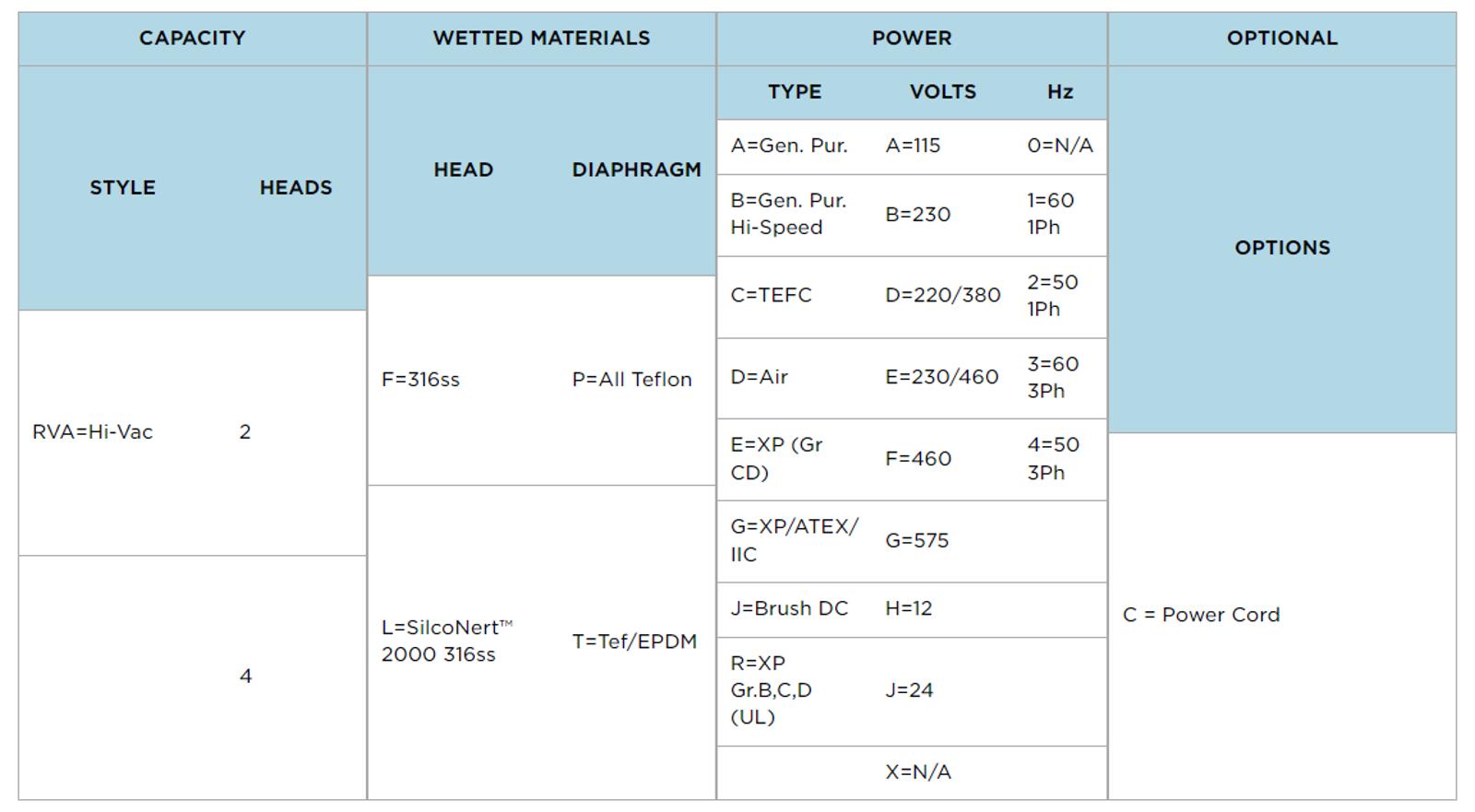
5. Select wetted materials
Choose pump materials based on gas chemistry and operating conditions.
6. Confirm electrical requirements
Provide voltage and frequency and verify the selected hazardous-area motor option.